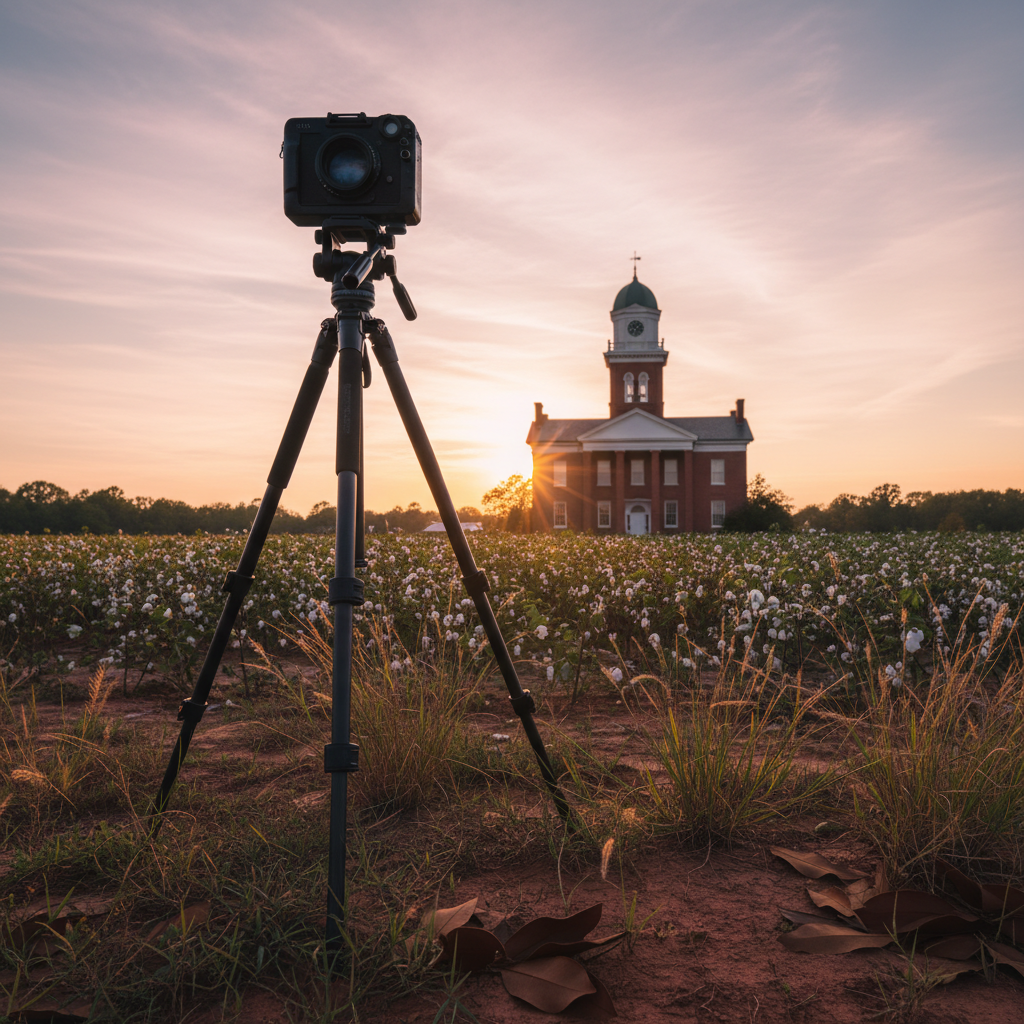
At the edge of a quiet Georgia cotton field at golden hour, a sturdy tripod-mounted camera faces a distant, historic red-brick courthouse topped with a prominent clock tower and small domed cupola. The ground is a mix of red clay and wild grass, dotted with fallen magnolia leaves. The low sun creates long, dramatic shadows and a warm, honey-toned light across the scene, giving the courthouse an almost glowing façade. The sky is streaked with pastel pink and orange clouds. Photographed from behind and slightly below the tripod, with the camera silhouetted in the foreground, the courthouse in sharp focus, this bold photographic realism composition suggests a photographer documenting the changing South and the legacy of civil rights, with no people visible.

Georgia Memoir

Essays, investigations, and memories from a Georgia mother witnessing civil rights history in real time.

Spotlight

Here I pin the long-form stories that changed me—civil rights journeys, courtroom steps, Georgia nights—so you can walk beside me, slowly, deliberately, through the making of a mother and a movement.
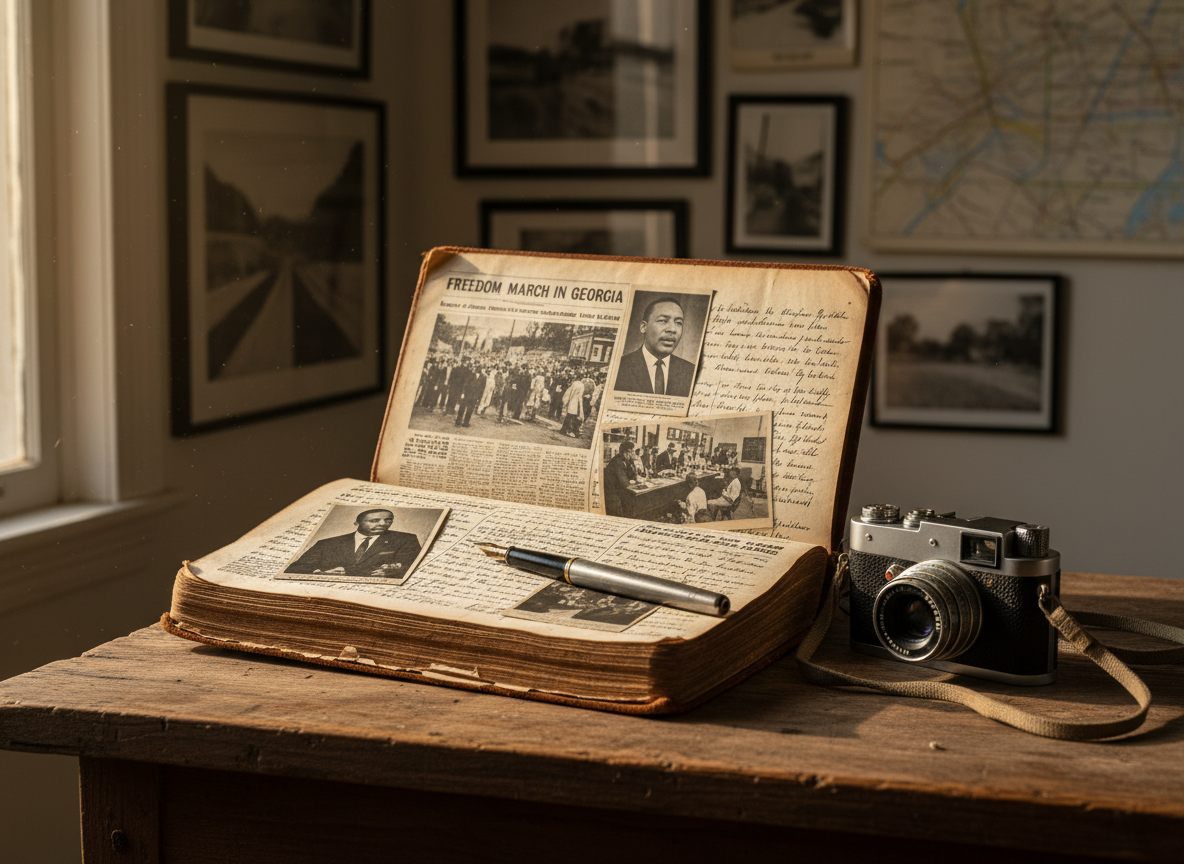
A vintage, well-worn leather-bound journal lies open on a weathered wooden table, its pages filled with dense handwritten notes and clipped monochrome news photographs about Georgia’s civil rights era. A classic metal fountain pen rests diagonally across the spine, next to a small, scuffed 35mm film camera with a fabric strap. Soft late-afternoon window light from the left glows warm and golden, catching the curl of the paper edges and the metallic highlights of the pen and camera. In the blurred background, framed photos and maps of Georgia’s small towns hint at decades of reporting. Photographic realism, eye-level composition with a shallow depth of field, bold yet intimate mood, emphasizing a life of journalism and memory without any people present.