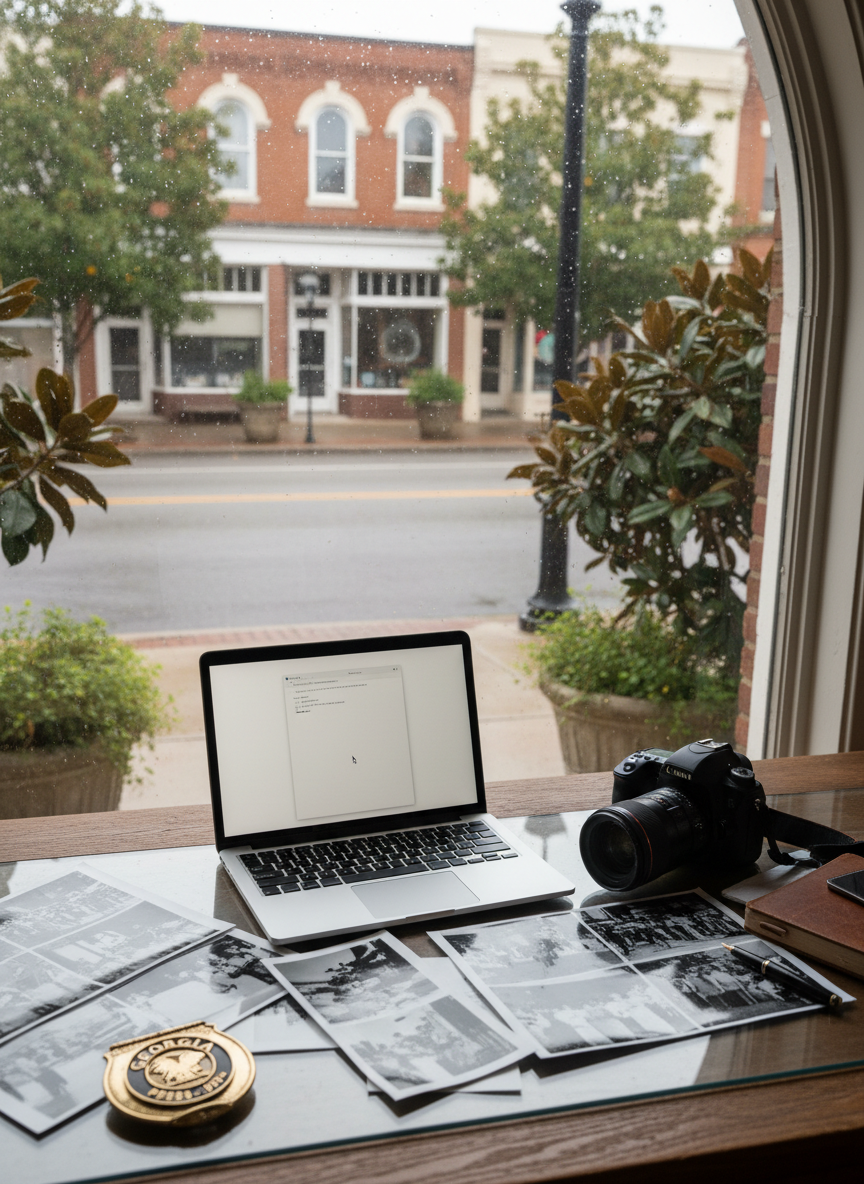
A sturdy wooden desk positioned beside a tall window overlooking a quiet Georgia main street lined with brick storefronts and magnolia trees, all seen through slightly rain-speckled glass. On the desk, a modern laptop displays a blank document, surrounded by scattered printed contact sheets, a vintage press badge, and a DSLR camera with a large lens. Overcast daylight spills through the window, creating soft, diffused lighting and muted reflections on the screen. The composition is shot from a slightly elevated angle, with the street outside forming a bokeh backdrop. The mood is contemplative and determined, photographic realism with a bold, documentary feel, suggesting a journalist mother preparing to write a powerful memoir about civil rights and small-town Georgia, without including any human figures.

April Christina

Journalist, photographer, and mother illuminating civil rights stories rooted in Georgia.

About

A Georgia Mother Bearing Witness

I am April Christina Fuller Nunley Sasser, a Georgia mother, journalist, and photographer tracing fifty years of Southern light and shadow, documenting civil rights in the making and the everyday courage of families, faith, and justice.

A nighttime Georgia street scene in photographic realism: the exterior of a modest brick newspaper office in a small town, its tall front windows glowing warmly against the deep indigo sky. Inside, visible through the glass, long tables are covered with scattered broadsheets, film canisters, and contact prints; a single desk lamp casts a bright pool of light over an open notebook and an old camera. Outside, wet pavement reflects neon from a nearby diner sign and the yellow window light, creating shimmering patterns. Shot from a low angle across the street, with the newsroom as the focal point and the town fading into soft blur. The mood is bold, determined, and slightly nostalgic, hinting at late-night reporting on civil rights stories, with no people present anywhere.
Inside a cozy, lived-in Georgia home, a large corkboard dominates a wall above a simple white writing table. The board is densely covered with pinned black-and-white prints from civil rights marches, small-town street scenes, and courthouse steps, interwoven with colorful crayon drawings, school photographs clipped out of frames, and handwritten note cards. On the desk below sit a steaming ceramic mug, a digital audio recorder, and a stack of dog-eared notebooks tied with twine. Warm lamp light from a shaded table lamp on the right blends with faint twilight blue leaking in from a nearby window, creating a gentle, layered glow. Shot at eye level with moderate depth of field, photographic realism, the atmosphere is bold yet tender, evoking motherhood, memory, and creative work without showing any people.
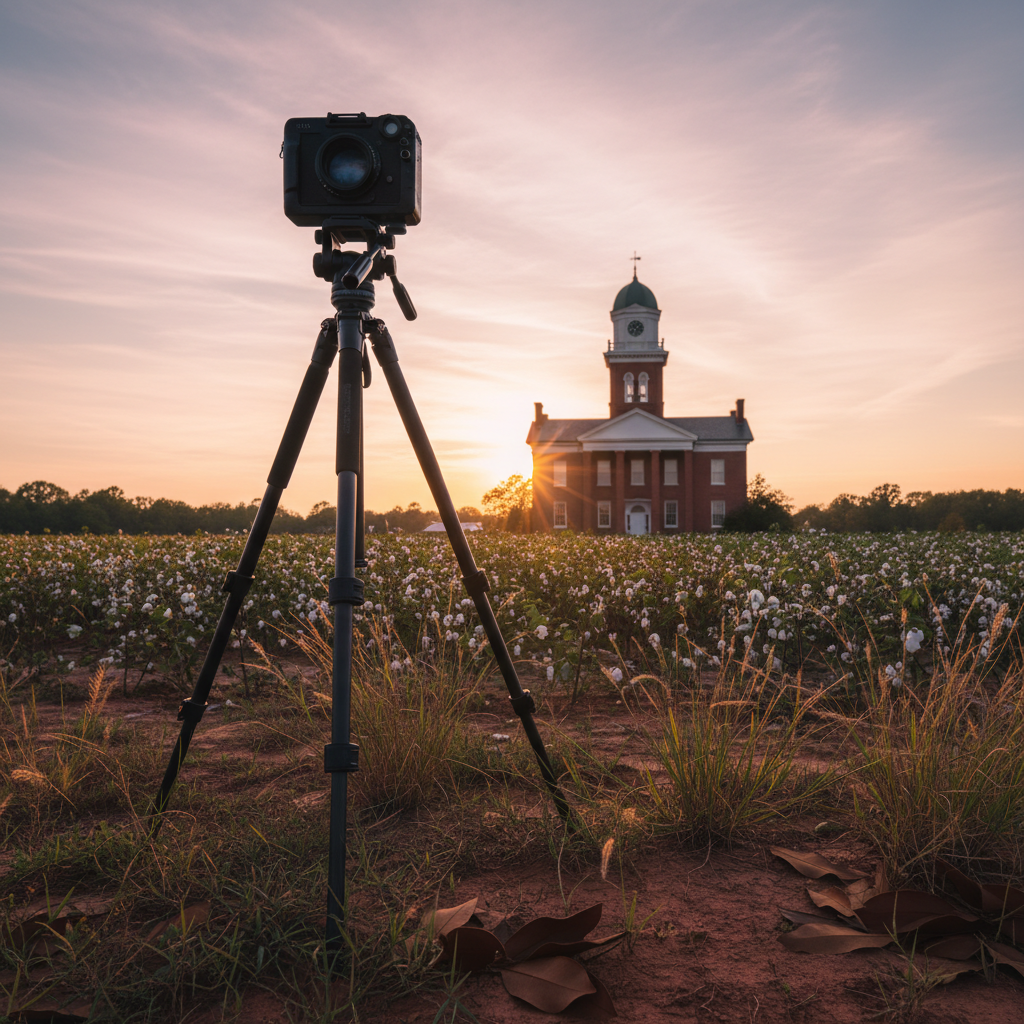
At the edge of a quiet Georgia cotton field at golden hour, a sturdy tripod-mounted camera faces a distant, historic red-brick courthouse topped with a prominent clock tower and small domed cupola. The ground is a mix of red clay and wild grass, dotted with fallen magnolia leaves. The low sun creates long, dramatic shadows and a warm, honey-toned light across the scene, giving the courthouse an almost glowing façade. The sky is streaked with pastel pink and orange clouds. Photographed from behind and slightly below the tripod, with the camera silhouetted in the foreground, the courthouse in sharp focus, this bold photographic realism composition suggests a photographer documenting the changing South and the legacy of civil rights, with no people visible.
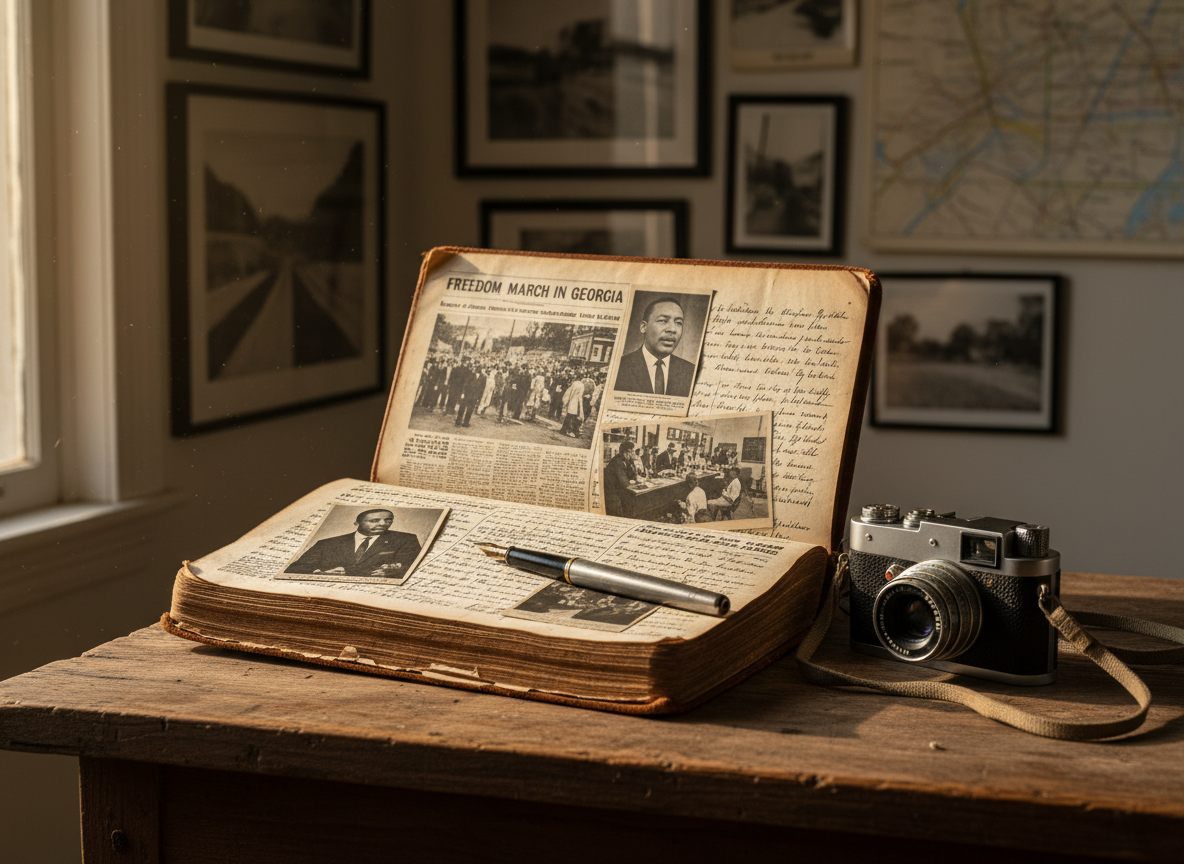
A vintage, well-worn leather-bound journal lies open on a weathered wooden table, its pages filled with dense handwritten notes and clipped monochrome news photographs about Georgia’s civil rights era. A classic metal fountain pen rests diagonally across the spine, next to a small, scuffed 35mm film camera with a fabric strap. Soft late-afternoon window light from the left glows warm and golden, catching the curl of the paper edges and the metallic highlights of the pen and camera. In the blurred background, framed photos and maps of Georgia’s small towns hint at decades of reporting. Photographic realism, eye-level composition with a shallow depth of field, bold yet intimate mood, emphasizing a life of journalism and memory without any people present.

Reach April

For interviews, collaborations, or speaking about civil rights, motherhood, or photography, please get in touch.

← Back

Thank you for your response. ✨